
I prefer live-action films. Animated films are mostly about identical plot arcs, predictable moral lessons and mandatory cute sidekicks. The truth is perhaps that I am too old to watch children’s movies.
As a cinephile, I watched a lot of animated films. Famous Japanese masterpieces like “Spirited Away 千與千尋” , “Your Name你的名字” and “Demon Slayer鬼滅之刃” etc. are all captivating. Most Japanese animated films, apart from the violent themes, are an awakening in philosophy or let us reflect on life. Adults will enjoy them.
Chinese animated movies are closing the gap with the global market. Their standards are getting higher and higher. But, they somehow do not yet understand the demands of the global market, and, for example,their colour scheme and cartoon design are still peculiarly indigenous. This is why Chinese animated movies have only a small market share in the world at the moment.
American animated films are still in the driver’s seat. We are fond of “Kung Fu Panda功夫熊貓”, “Moana魔海奇緣”, “Shrek史力加”, “Ice Age冰河世紀”, “Frozen魔雪奇緣” and “Minions迷你兵團”…They are of all stripes. They want to capture the world market and so never keep their style or taste only to themselves.
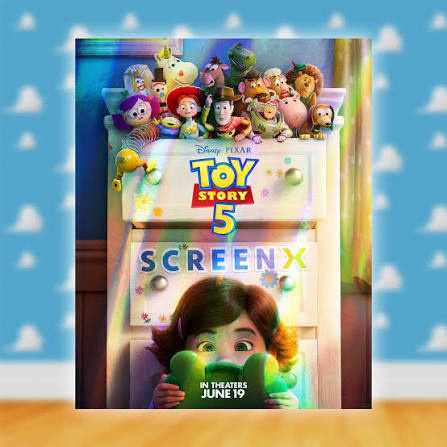
Now, “Toy Story 5反斗奇兵5” is a successful animated film both in terms of entertainment and meaningfulness.
The story is this: Woody, Buzz, Jessie, and the rest of the toy gang find their jobs threatened by an advanced interactive tablet device called “Lily”. Lily takes over their 8-year-old owner Bonnie’s attention and playtime. As Bonnie loses interest in and drifts away from physical toys, she moves toward screen time of the tablet. Jessie steps up as the leader to keep the group together and figure out how they, as old toys, can fit into a digital world that is replacing their good old days. The toys dislike Bonnie not any more less than what she loses interest in them.
In the animated world, all is bad can end well. Electronic toys, old toys and kids in the movie finally resolve their conflicts. There is a happy ending.
I asked a young boy, “Have you ever played with electronic toys?” He replied, “No, my mobile phone is my toy!” Another child interrupted, “I played with old toys using wood, metal, cloth, and plastics only before I was 5!”
Young people are not a fan of older things because these often represent traditional culture, clunky aesthetics, boredom, and outdated technology. Youth want to use trends to separate their identity from their parents. New toys are a kind of social currency too. Being able to buy the newest clothing or things and keep up with the social trends provides status to youngsters among their peer groups. Fast-moving digital toys push a big pressure for the young people’s need for cool updates. This mentality is called “FOMO” (fear of missing out).
Actually, not abandoning old stuff is sentimentally a wonderful thing. Old toys are the surviving fossils of our past. They connect us to great friends who have disappeared, or loved ones who have passed away. They remind us of the happiness that no longer exists. Most importantly, it grounds us to realize who we are and where we came from in an ever-changing world.
Of course, it is useless to talk to a kid about the above. First of all, they do not have a history. Having a roving eye on new things is what can drive them to explore a new world! They are not used to being beset by the loss of old things.
“Why should we be off with the old and always on with the new?” is the fantastic message that the recent film “Toy Story 5” inspires you!
This article can also be found at the following sites: